“My west balcony fried the basil every July until I read your shade issue. A 34-litre pot and a cloth by ten in the morning — three summers now and it finally made pesto. Only grumble: the cloth flaps loudly in the afternoon wind.”
Hours of direct sun, pot volume and summer watering, measured for your side of the building — not the whole street, not the whole city. Just your corner of it.
Shade, not more water
A balcony is a climate of its own. We measure it, one month at a time.
Balcony Bloom is a small monthly journal for people growing things on concrete, between the Beydağları and the sea. We test what actually survives an Antalya July, and we publish the numbers.
Printed in KonyaaltıMonthlyPrinted and posted, most months since the spring of 2016 — 59 issues and 612 balconies logged across the city.
A south balcony on the eighth floor and a north balcony on the second are two different planets. Tell us three things and the sun arc below moves to your corner — with the pot size and July watering that go with it.
Plate 59 · the calculator
—
Guide figures for open Antalya balconies. They are a starting point, not a substitute for watching your own plants.
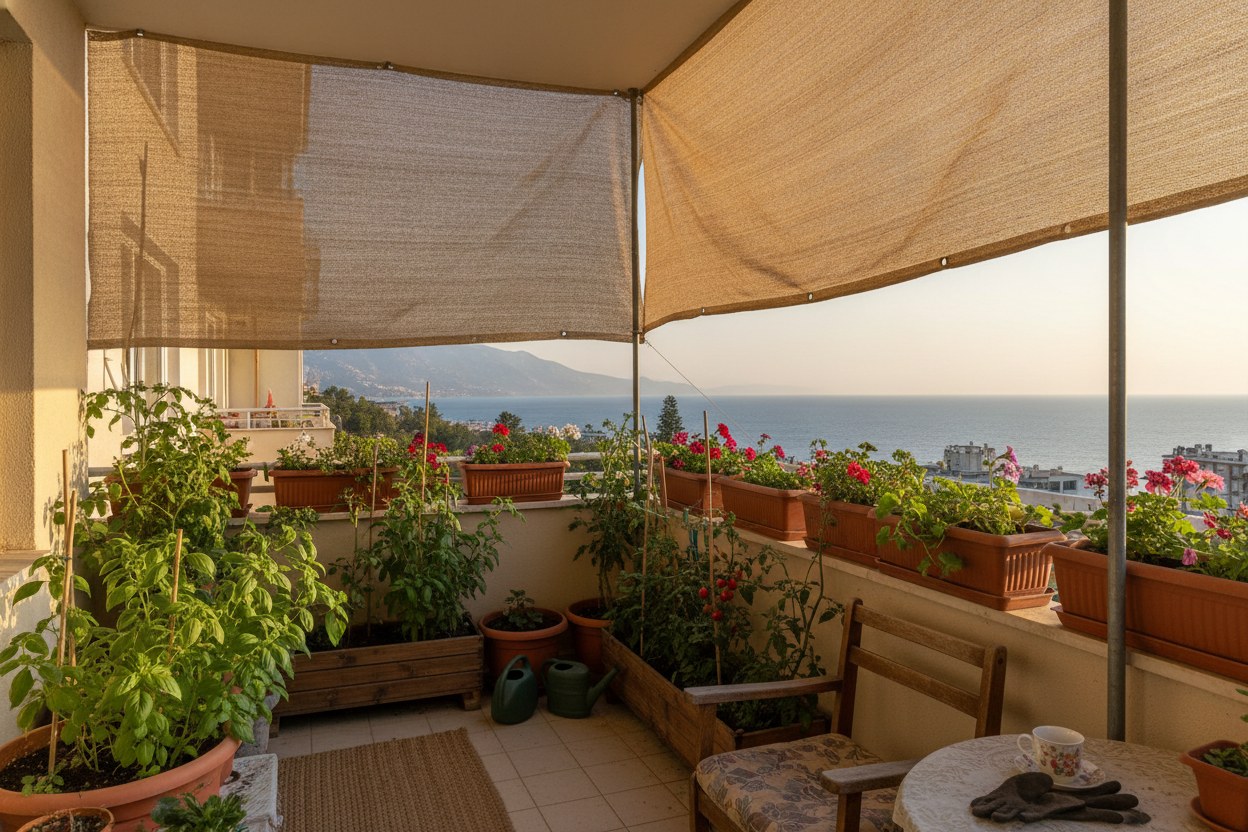
A south balcony in Antalya in July is not a sunny spot — it is a stress test. Direct light bounces off the rail, the wall and the floor at once, and the wind at height carries off whatever moisture the sun hasn't already taken.
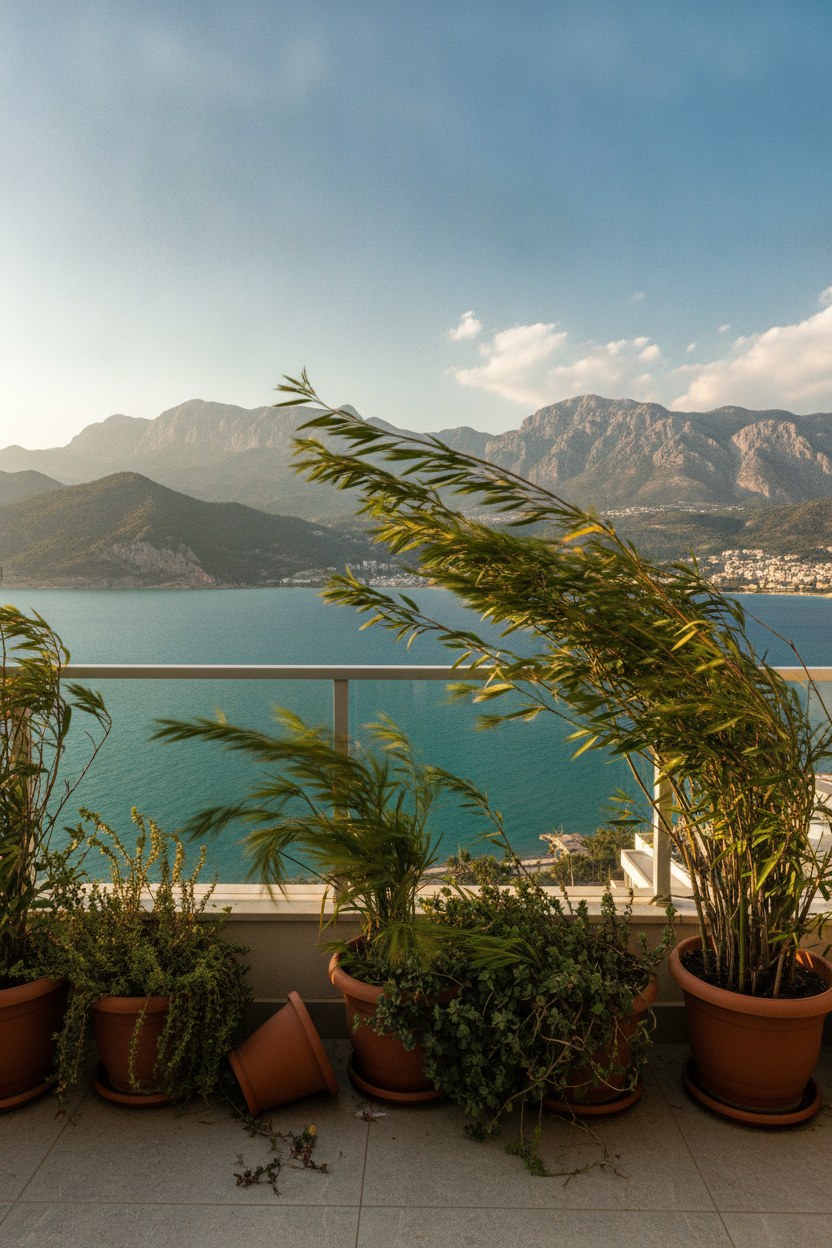
Orientation sets the hours of direct sun. Height changes everything else: by the eighth floor a steady sea breeze dries a pot before midday, and near the Konyaaltı shore that breeze carries salt that scorches soft new leaves. None of this is a reason to give up — it is a reason to measure first.
Every floor you climb, add roughly one pot size. Wind, not sun, is what finishes off most high-rise balcony plants in August — and a bigger body of soil is the simplest defence against it.
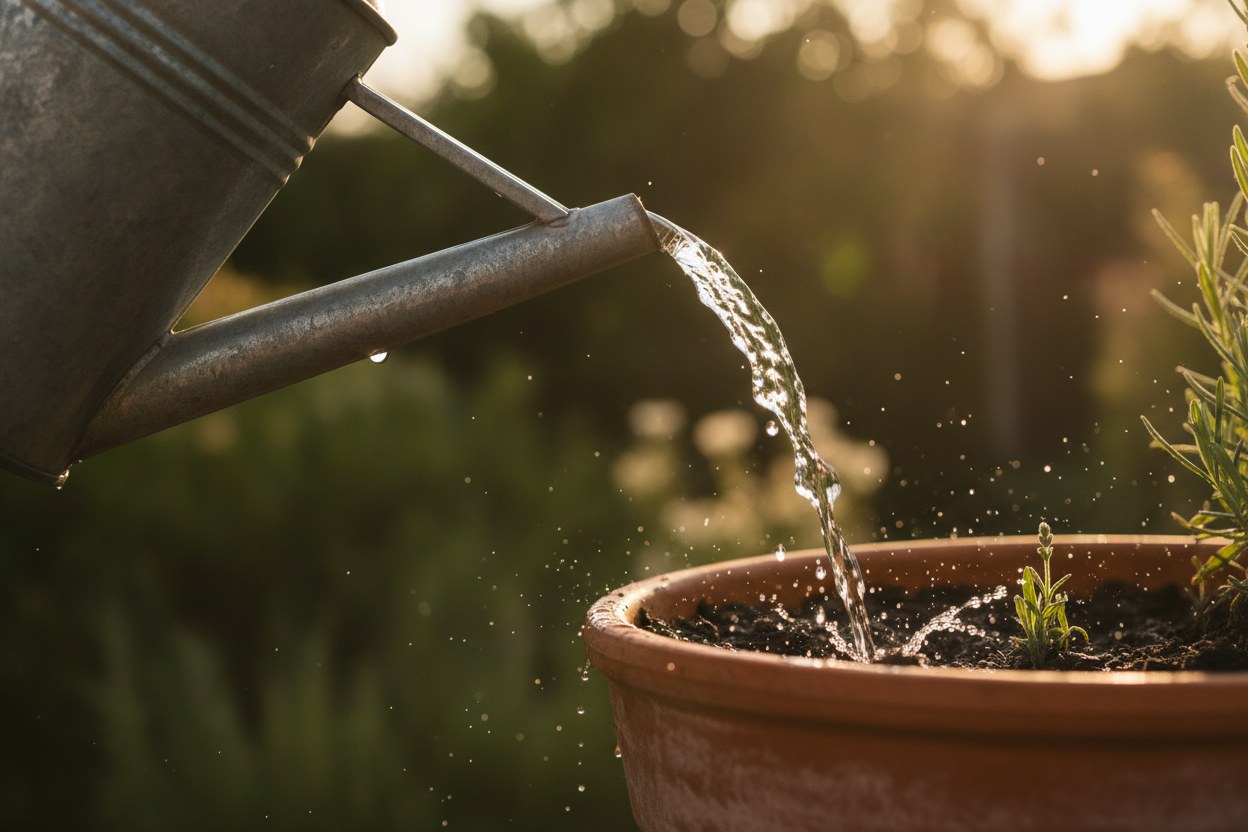
A small pot in full sun is a plant on a drip-feed you can never quite keep up with. Soil volume is stored water: double the litres and you roughly halve how often you have to stand there with the hose.
The table is what we reach for before buying a single plant. It assumes an open, sunny balcony; in shade you can go a size down, and above the eighth floor a size up.
| Plant | Minimum pot | Note |
|---|---|---|
| Basil, parsley, mint | 8–12 L | Shallow roots, water little and often |
| Pelargonium, petunia | 12–18 L | Loves full sun once established |
| Tomato, pepper, aubergine | 25–40 L | One plant per pot, no sharing |
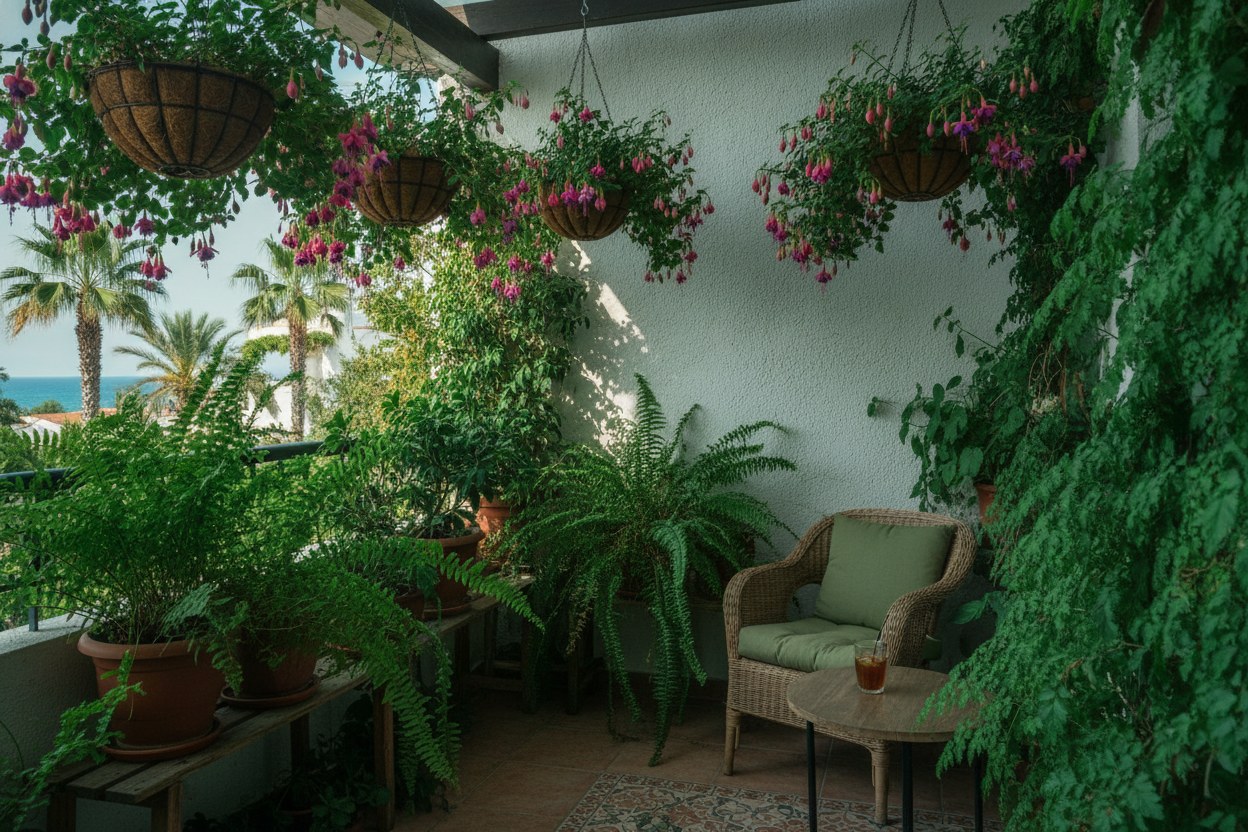
| Hydrangea, fuchsia | 20–30 L | Keep in afternoon shade |
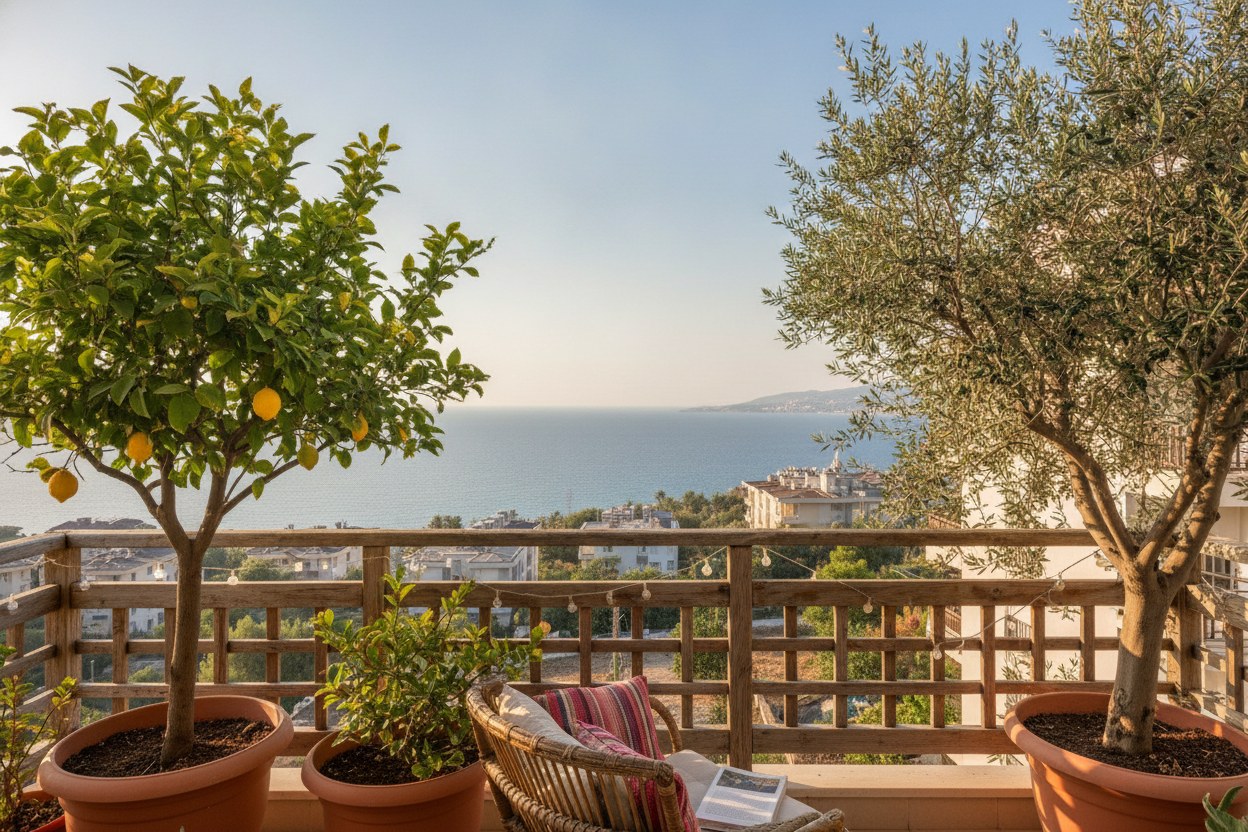
| Lemon, kumquat (citrus) | 45–70 L | Overwinters outside here |
| Olive, bay, rosemary | 40–60 L | Wind-firm and drought-tough |
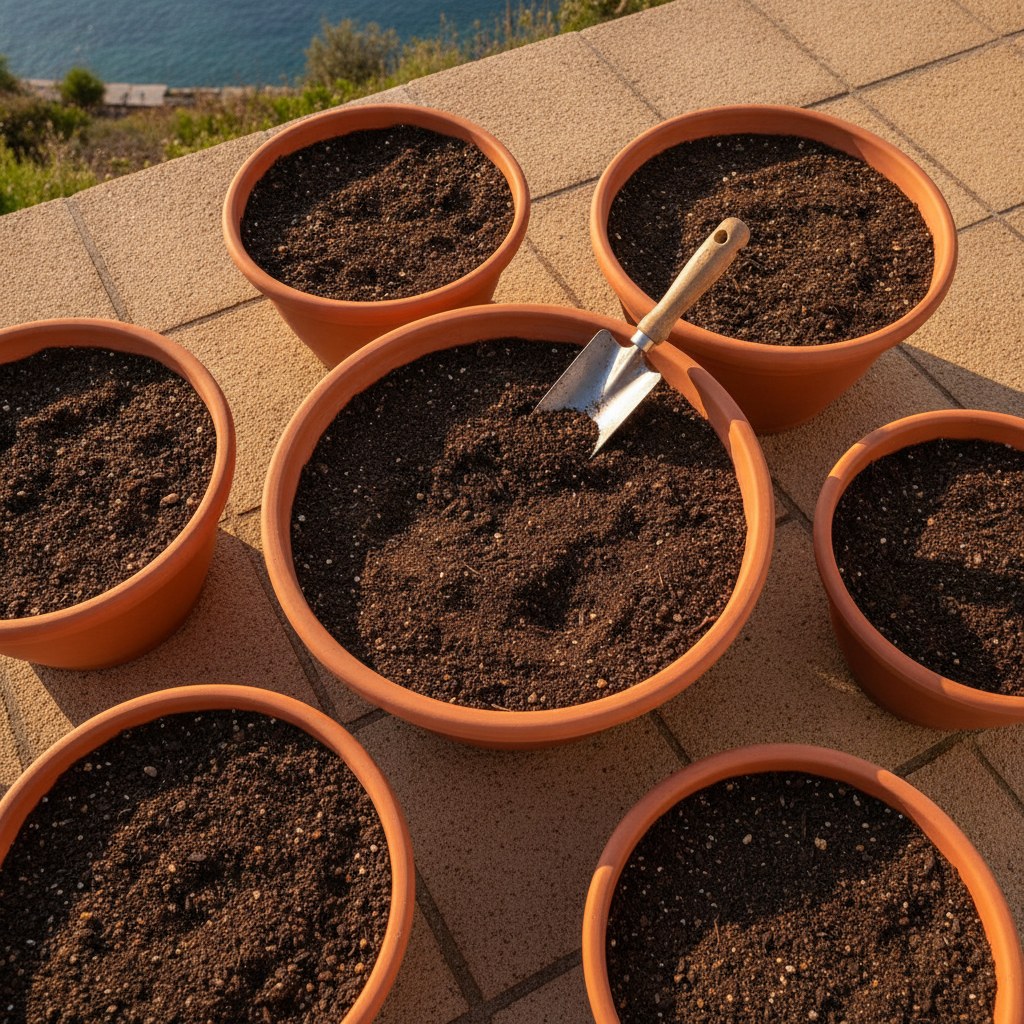
Mix in a third of good compost and a handful of coarse grit per pot. It holds water on the hot days and still drains after a November downpour.
When a plant wilts at two in the afternoon, the instinct is to water. But at 38 degrees the roots are often wet already; the leaves are simply losing water faster than any root can replace it. More water in that moment drowns as often as it saves.
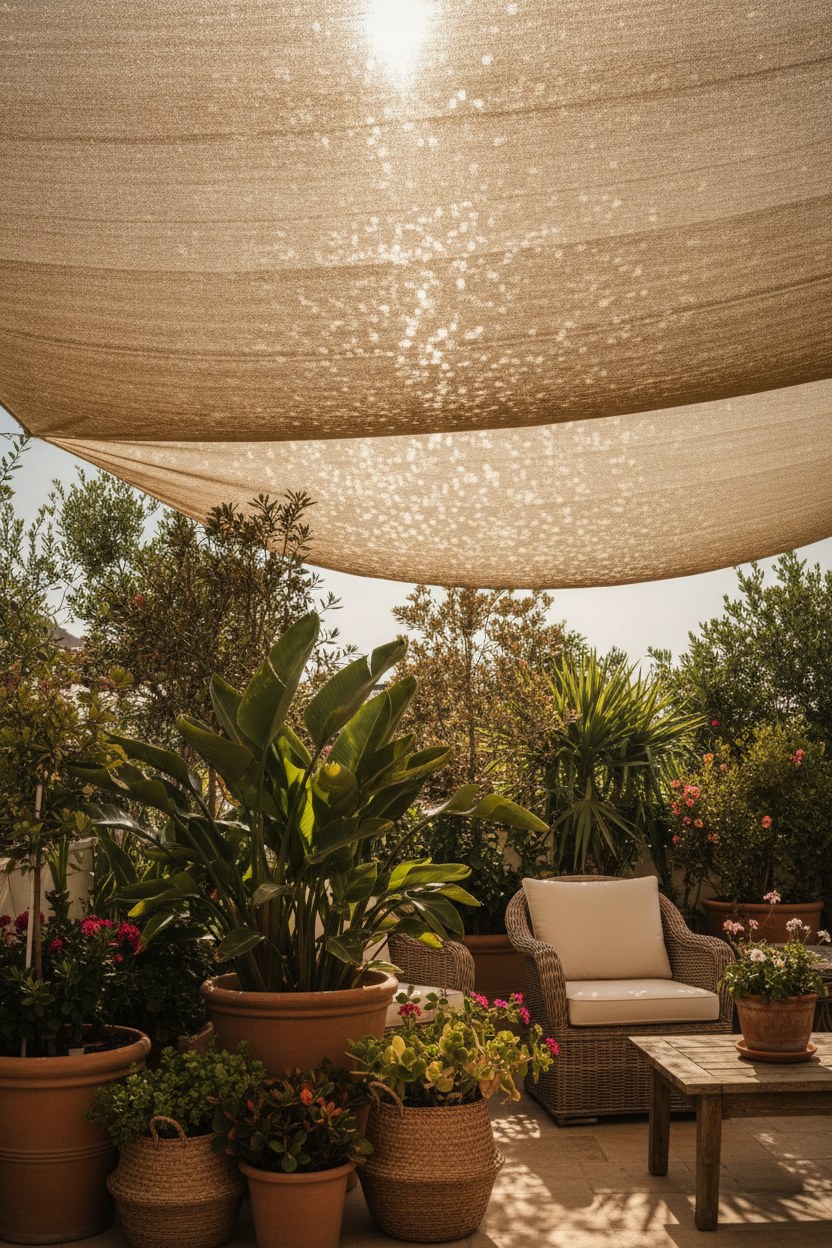
A 50% shade cloth from mid-June through August cuts leaf temperature, slows drying and lets the plant breathe through the worst hours. We hang ours on the west rail by ten in the morning and take it down at six. It is the single change that saves the most plants on this coast.
A south or west balcony on a July afternoon is a stress test, not a sunny spot. Shade cloth buys the plant its best chance — but some tender, thin-leaved things simply will not hold through peak summer here, and no amount of water changes that.
Antalya winters are kind. Most years the coast barely touches zero, so citrus, olive, bay and pelargonium stay out all season — no dragging heavy pots indoors, where dry heat and low light do more harm than the cold ever would.
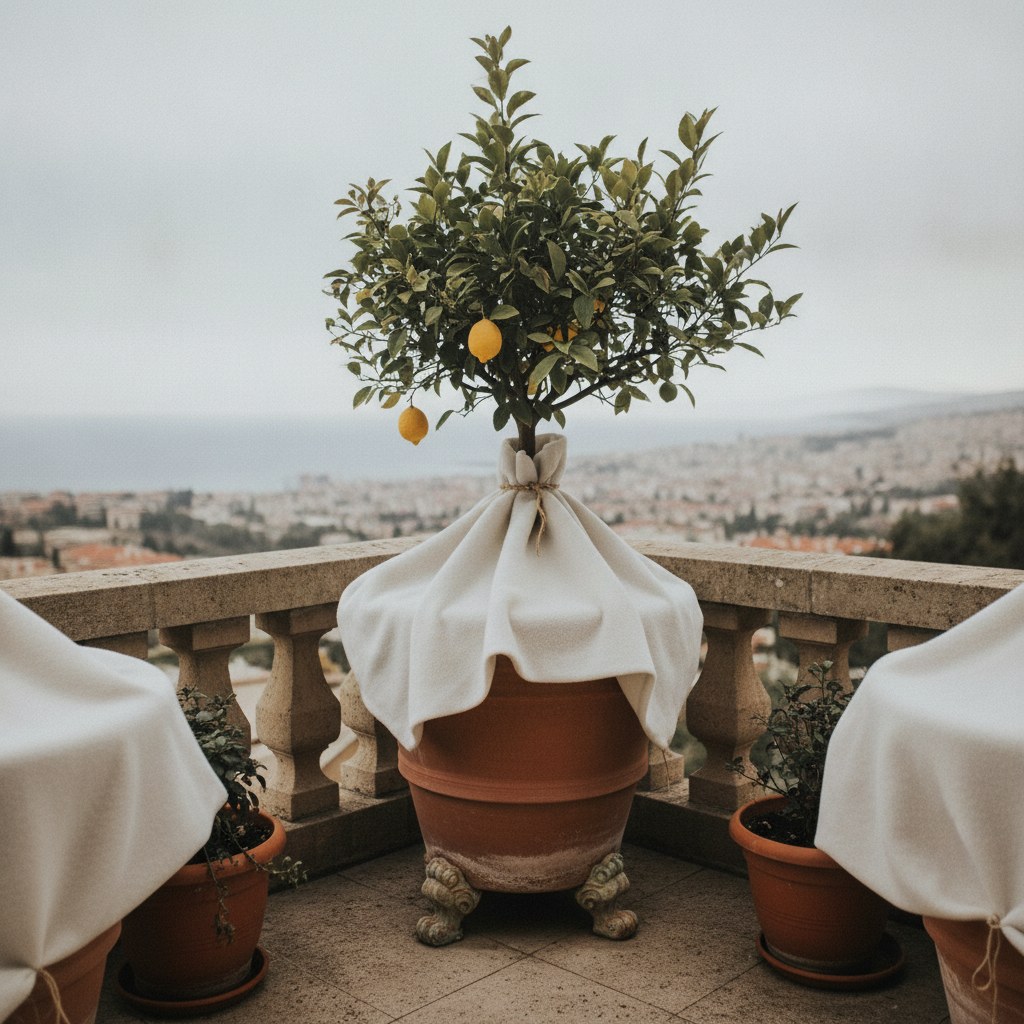
The two cold snaps that matter usually land in January and early February. On those nights, move pots against the wall, group them together and throw a sheet of fleece over the tender ones. Lift pots onto feet so winter rain drains away — wet roots in a cold pot are the real killer, not the air.
A cold, wet pot kills more balcony plants than the frost itself. Lift pots onto feet, keep the tender ones dry, and don't trust a mild December to last the whole winter.
Pale months — December to February — are the frost-watch weeks.
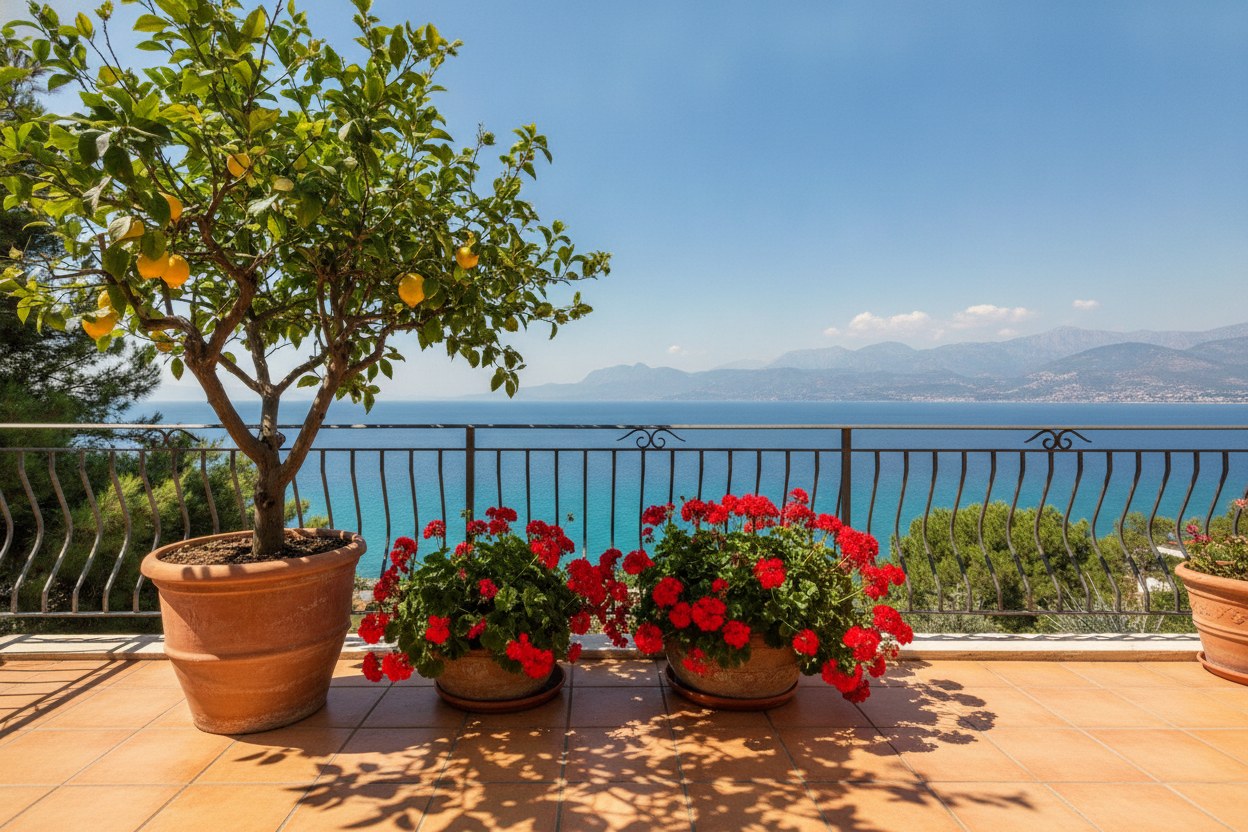
Every issue we print a handful of letters from balconies around the city. Here are three from this season — unedited, pots and all.

“My west balcony fried the basil every July until I read your shade issue. A 34-litre pot and a cloth by ten in the morning — three summers now and it finally made pesto. Only grumble: the cloth flaps loudly in the afternoon wind.”

“Eleventh floor in Hurma, wind like a hairdryer. I moved everything up one pot size as you suggested and grouped the pots in a corner. The lemon stopped dropping leaves by August and gave nine fruit. The olive didn't care either way — tough thing.”

“I always thought my north balcony was a dead loss. Your calculator said two hours of sun and to lean into ferns and fuchsia instead of fighting it. It is the coolest, greenest corner of the flat now — and I water it twice a week, not twice a day.”
More than almost anything else. On this coast a south balcony can see seven or more hours of direct sun while a north one sees barely two. That single fact decides which plants will thrive, how big the pots need to be and how often you'll be watering in July. It is why the calculator asks for your side first.
Soil holds water; a watering can only tops it up. A larger pot carries more moisture through the hot hours, keeps roots cooler and buffers the plant against a missed day. Watering more often in a small pot washes nutrients out and still leaves the plant thirsty by afternoon. Volume is the lasting fix.
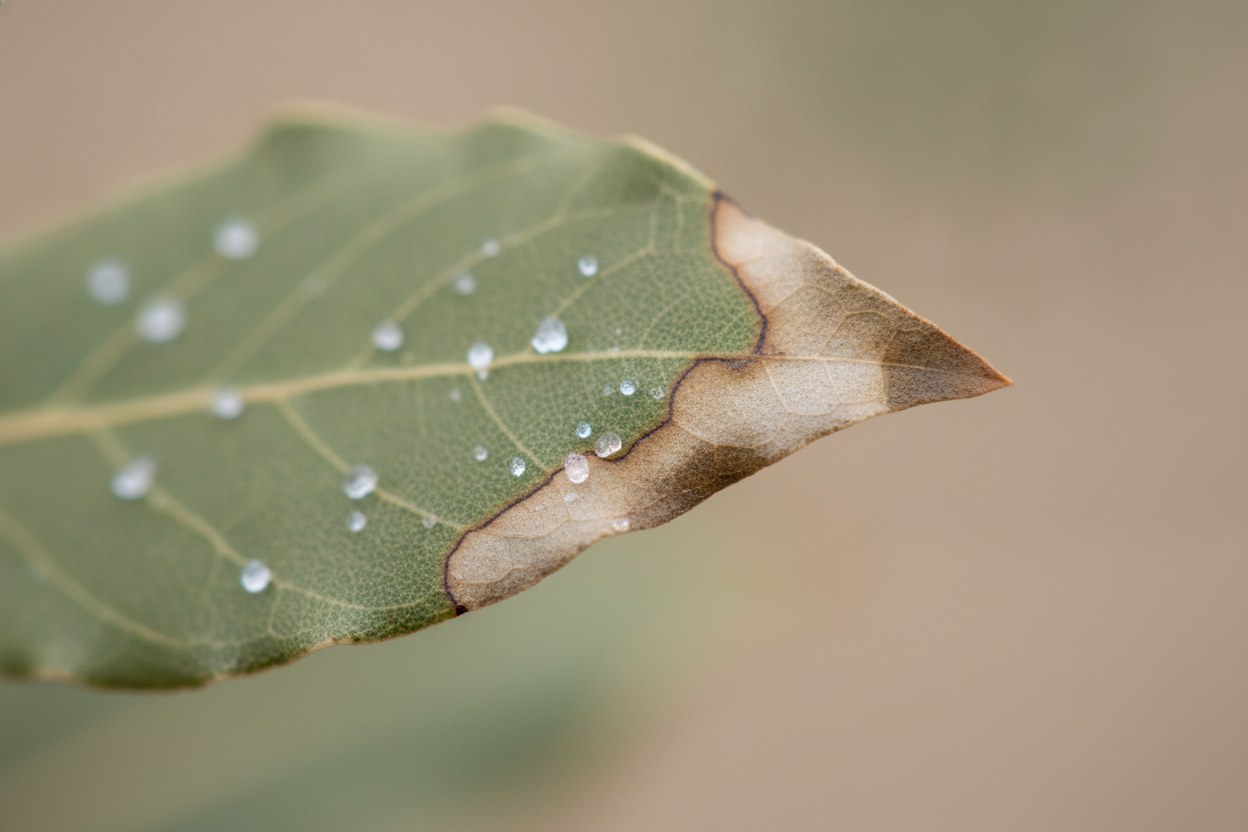
Within a few hundred metres of the beach, summer wind carries fine salt that browns soft new growth. Rinse leaves with fresh water after a strong, dry blow, and favour tougher, waxy-leaved plants — olive, bay, rosemary, pelargonium — on the most exposed rails. It reads like a watering problem but it isn't one.
On a south or west balcony, yes — it is the change that saves the most plants. A 50% cloth from mid-June through August lowers leaf temperature and slows drying far more effectively than extra water. North and heavily shaded balconies can skip it.
Most can. Citrus, olive, bay and pelargonium stay out through a normal coastal winter. Keep an eye on the forecast for the January and February cold snaps, group pots against the wall and fleece the tender ones on the coldest two or three nights. Dragging them into a dry, dim room usually does more harm than the cold.
They are honest estimates built from our own measurements across 612 Antalya balconies, not a satellite model of your exact wall. Tall buildings opposite, a deep awning or a mountain shadow will shift the real figures. Treat the result as a confident starting point, then adjust by watching your own plants through one season.
Yes. Balcony Bloom goes out free by email every month, with a small printed run we post to subscribers around Antalya. Add your address on the contact page and the current issue arrives within a day or two.
If your question isn't here, write to the postbag — a plant that won't settle is often a clue to something the calculator can't see from a street away.
Measured advice for your side of the building, a reader postbag, and the one shade tip that saves a summer. Free, monthly, no selling.
Subscribe free → Free · monthly · no selling